Thanksgiving Invitations Backgrounds: AI-Generated Art for Your Projects
The pressure to create something visually stunning for the fall season is real. Whether you are a small business owner planning a client appreciation dinner, a graphic designer whipping up social media assets, or a crafter making personalized invitations, the hunt for the perfect imagery is often the biggest bottleneck. We have all spent hours scrolling through stock photo sites, trying to find that specific autumn aesthetic that feels genuine and high-quality, only to settle for something generic. This is where the landscape of digital design assets is shifting, specifically with the introduction of AI-generated illustrations.
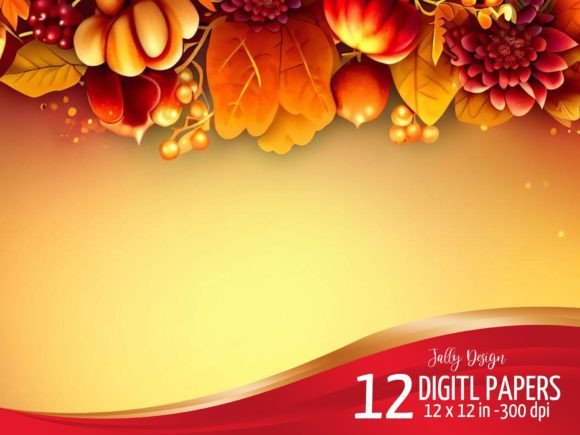
I recently spent some time working with a collection of Thanksgiving Invitations Backgrounds that utilizes this new technology. These aren't your standard clip-art turkeys or blurry photos of leaves. These are intricate, high-resolution digital paintings designed to solve the problem of finding unique, royalty-free imagery. The collection is built around the concept of "pack" purchasing—you get a bundle of images that share a cohesive visual language but offer variety for different layouts. The key selling point here is the level of detail; the prompt to "zoom in for details" is actually necessary. The AI generation process creates complex textures in the foliage, fabric, and lighting that mimic hand-painted realism.
The Visual Character: Depth, Texture, and Warmth
When we talk about the "personality" of a design asset, we are really talking about the mood it sets. These backgrounds are heavy on earth tones—burnt sienna, deep mustard, forest green, and warm browns. They lean into a cozy, rustic aesthetic that feels timeless rather than trendy. Because they are generated with a high level of fidelity, they function almost like premium font families in the sense that they provide a solid foundation for your entire project. You aren't just getting a flat image; you are getting a world to place your text into.
One of the biggest advantages of using these AI-generated backgrounds is the ability to create depth. In modern graphic design, flat design is slowly giving way to layered, 3D elements. These backgrounds allow you to create a sense of foreground and background even on a 2D surface. If you are designing a digital invitation, you can place your text in a "clear" area of the illustration, allowing the intricate details of the background to frame your message without overwhelming it. This visual hierarchy is crucial for readability. If the background is too busy, the text gets lost. These images are usually composed with specific focal points in mind, making it easier to find that sweet spot for your typography.
Strategic Applications: Beyond the Invitation
While the name suggests a singular use case, limiting these assets to just Thanksgiving Invitations Backgrounds would be a missed opportunity for any content creator or entrepreneur. The versatility of a high-resolution, printable image file (specifically at 12x12 inches and 300dpi) means it can be adapted for a wide range of commercial and personal projects.
- Wallpapers and Digital Planners: For bloggers and digital product sellers, these images make excellent seasonal desktop or phone wallpapers. The 300dpi quality ensures that even when cropped for mobile screens, the pixels remain sharp.
- Fashion and Textile Mockups: If you are in the POD (Print on Demand) space, you can use these as seamless patterns for scarves, tote bags, or pillowcases. The autumnal palette works perfectly for Q4 merchandise.
- Social Media Marketing: Marketers know that engagement drops if the imagery is stale. Using these backgrounds for Instagram Stories, Pinterest pins, or Facebook headers gives your feed a cohesive, seasonal update without requiring a photoshoot.
- Editorial and Publishing: For publishers creating e-books or digital magazines, a full-bleed background image can set the tone for a recipe section or a holiday guide instantly.
Pairing Typography with Complex Imagery
Here is where the technical expertise comes in. You have this beautiful, detailed background. Now, how do you make sure your text doesn't disappear? This is where understanding font pairing becomes essential.
Because these backgrounds are rich and textured, they act similarly to a busy pattern. You generally want to avoid using a highly ornate script font or a chaotic handwritten font for your main body text. Instead, look for a clean sans serif font for the details (time, date, location). The clean lines of a sans serif provide a necessary contrast to the organic shapes of the AI art.
However, for the headline (e.g., "Thanksgiving Dinner"), you can afford to be more expressive. A bold serif font or a tasteful display font can work well here, provided it has enough weight to stand out against the colors of the background. A practical tip is to use a semi-transparent overlay—like a soft white box or a dark vignette—behind your text block. This creates a "safe zone" that ensures your message is the first thing the viewer sees, maintaining that professional visual hierarchy.
Evaluating Quality and Usability
When sourcing design assets, especially AI-generated ones, you have to be a discerning buyer. Not all AI art is created equal. You need to check for "artifacts"—weird blurring or distorted elements that can happen when the AI struggles to render complex objects like hands or specific text within the image.
The specs provided for this particular collection are industry standard for high-quality work: 12 x 12 inches at 300dpi in JPEG format. This is critical. A low-resolution image will pixelate the moment you try to print it on a card. The 12x12 format is also strategic; it is square, making it easy to crop for both landscape (desktop) and portrait (mobile) orientations without losing the main subject of the image.
Commercial Considerations
Before you use any image for your brand identity or commercial products, you must verify the licensing. Since these are digital products, check if the license allows for "end products for sale." For example, can you sell a t-shirt with this background? Can you sell a printed invitation? Most reputable sellers of these assets include a commercial license that covers these scenarios, but it is always your responsibility as the business owner to read the terms. This protects your small business from copyright issues down the line.
Final Thoughts on Workflow
Incorporating these backgrounds into your workflow is about efficiency. Instead of spending three hours painting a digital backdrop or trying to composite multiple stock photos, you download a pack, select the image that fits your color scheme, and drop it into your canvas. It allows designers to focus on the layout, the copy, and the overall strategy of the piece rather than getting bogged down in the foundational artwork.
For the upcoming season, whether you are designing a menu for a restaurant, a header for a blog, or a digital wallpaper for your subscribers, having a library of high-quality, atmospheric backgrounds is a game-changer. It ensures that every piece of content you release looks polished, cohesive, and ready for print or screen.